
 |
 |
 |
 |
 |
 |
 |
 |
Educated Cows Eat Weeds! |
Cows Eat Distaff and Italian Thistle |
In 2006 we targeted distaff thistle (Carthamus lanatus) and Italian thistle (Cardus pycnocephalus). We began in May, by refining the process so that we could teach cows to eat weeds in less than a week (see training steps) We worked with 60 heifers from the Lunny Ranch on Point Reyes in preparation for moving them to Nicasio Native Grass Farms owned and operated by John Wick and Peggy Rathmann in Nicasio. We also worked with 5 heifers at Mike and Sally Gale's Chileno Valley Ranch near Petaluma. The Lunny cows were trained in dry lot and the Gale's cows were trained in pasture. All cows learned to eat both distaff and Italian thistles, and the Lunny cows went on to graze both successfully in pasture. Unfortunately, Mike Gale got whooping cough and so we weren't able to move his trained cows to pasture. In 2007 about 130 of the Lunny's cows returned to the Wick Rathmann ranch in Nicasio. Twelve of the herd had been trained the previous year and they trained the rest of the herd to graze the target weeds. Several ranchers also expressed interest in seeing if their cows would eat milk thistle. Finding no toxins of concern, we trained the cow to eat them in pasture. Today |
Marin County, California Project, 2006 and 2007 |
| Funded by the Rathmann Family Foundation |
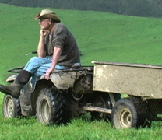 Mike Gale watches his heifers in training |
|---|
"We had come to the point where we were almost ready to give up our organic certification on the ranch. This is a remarkable experience because I was the total skeptic and now I'm the total believer. I really believe this is cutting edge stuff." See a short video with Mike and Sally Gale talking about their part in the project. |
 |